Humanoid vs Service Robots
Humanoid robots cost $500 to $5,000 per day to rent ($16,000–$200,000 to buy) and are built to be noticed — greeters and brand ambassadors for events and reception. Service robots cost $300 to $1,200 per day ($15,000–$60,000 to buy) and are built to work quietly all shift — food-running, bussing and hospitality delivery. The right pick depends on whether you need a moment or a workhorse.
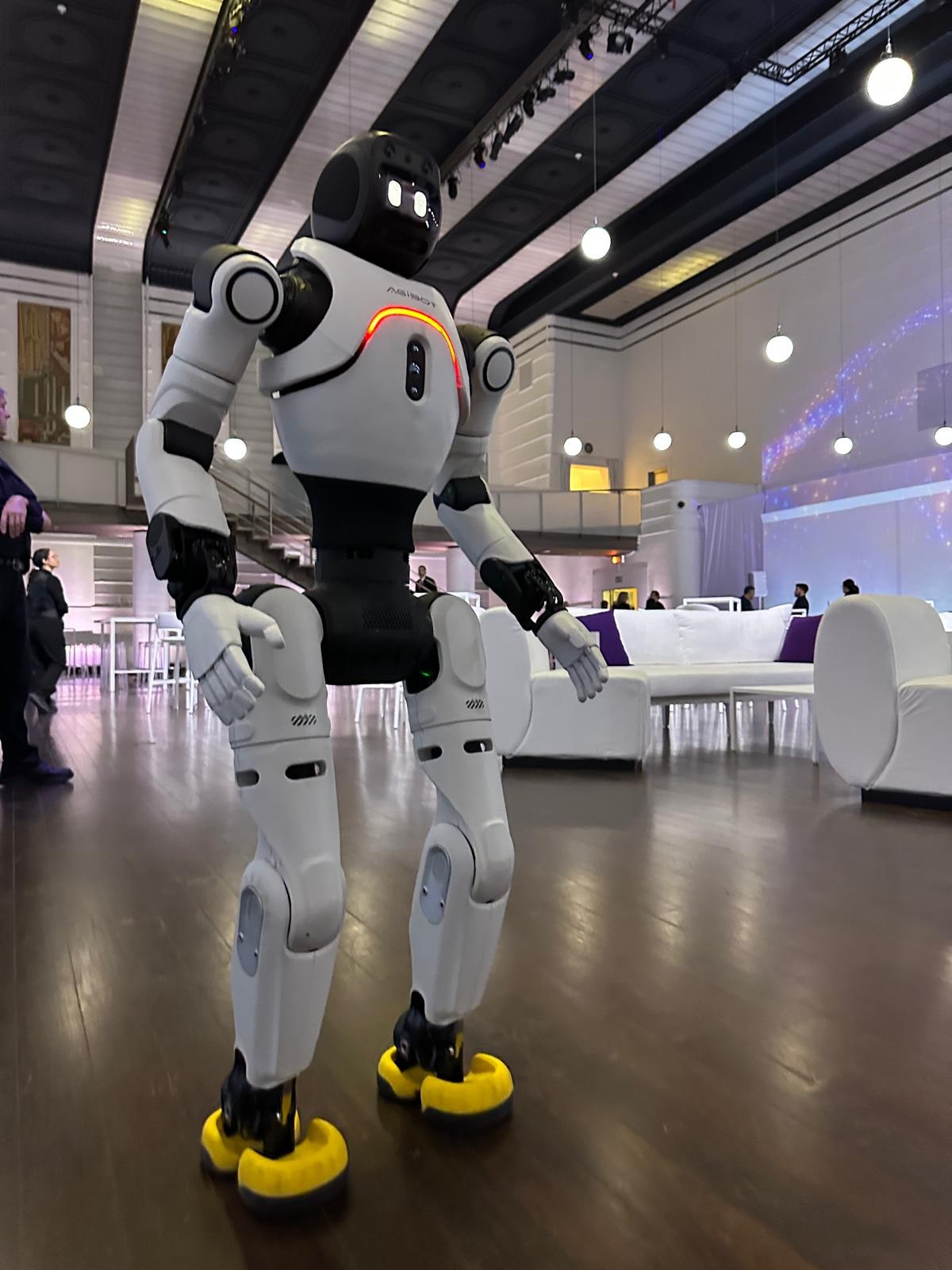
A humanoid robot is a bipedal or upper-body robot built for presence — it greets, talks, poses for photos and holds attention. A service robot is a wheeled platform built for repeatable work — carrying trays, bussing tables and moving supplies through the same route hundreds of times a shift. Both show up at hotels, restaurants and retail, but they solve different problems. This guide compares them head-to-head with real 2026 pricing so you can pick the right category before you start shopping suppliers.
Humanoid robots vs service robots
A neutral, factor-by-factor comparison. Neither category is universally "better" — they're built for different jobs.
| Factor | Humanoid robot | Service robot |
|---|---|---|
| Built for | Presence and interaction — greeting, brand ambassador work | Repeatable, everyday tasks — food-running, bussing, delivery |
| Typical 2026 rental | $500 – $5,000 / day | $300 – $1,200 / day |
| Typical 2026 purchase | $16,000 – $200,000 | $15,000 – $60,000 |
| Best for | Events, launches, reception, keynotes, R&D | Restaurants, hotels, retail floors, ongoing operations |
| Typical engagement | Per-day or per-event rental | Rental for trials; monthly lease for ongoing use |
| Mobility | Bipedal (or wheeled upper-body) with arms/gestures | Wheeled base, tray or cargo compartment |
| What draws people in | Novelty, conversation, photo opportunities | Reliability — same job, every shift, without a break |
Prices reflect typical 2026 rates across the BuyAndRentRobots.com directory and vary by model. See the full pricing guide for rates across every robot type.
Pros and cons of each
Humanoid robots
- Draws a crowd and earns social/press attention.
- Can converse, gesture and pose for photos.
- Flexible — reprogrammed content and branding per event.
- Higher day rate and purchase price than a service robot.
- Usually rented for the specific engagement rather than run all day, every day.
Service robots
- Built for repetitive, everyday tasks without fatigue.
- Lower day rate and purchase price than a humanoid.
- Frees staff from repetitive carrying and delivery runs.
- Less "wow factor" — not built for conversation or photo-ops.
- Usually the better fit for a monthly lease at high utilization.
Which should you choose?
- Need attention at an event, launch or booth? Go humanoid — that's exactly what it's built to earn.
- Need to run food, bus tables or deliver supplies all shift? Go service robot — it's the lower-cost workhorse for repeatable tasks.
- Want both a lobby greeter and back-of-house delivery? Many operators book one of each rather than asking either category to do the other's job.
- Not sure yet? Rent whichever fits your immediate need first — both categories are available short-term before you commit to a purchase or lease.
Humanoid vs service robots — FAQ
What's the difference between a humanoid robot and a service robot?
A humanoid robot is built for presence and interaction — greeting, conversing and posing for photos, usually bipedal or upper-body. A service robot is built for repeatable, everyday tasks like food-running, bussing and delivery, usually a wheeled platform with a tray or cargo compartment.
Which is cheaper, a humanoid or a service robot?
Service robots are cheaper on both rental ($300–$1,200/day vs $500–$5,000/day) and purchase ($15,000–$60,000 vs $16,000–$200,000). Humanoids cost more because they're built for interaction and presence, not just repeatable tasks.
Can a service robot replace a humanoid greeter, or vice versa?
Not well. A service robot isn't built to converse or hold attention the way a humanoid does, and a humanoid isn't priced or built for hundreds of repetitive food-running trips per shift. Most operators that need both book one of each.
Which is better for a restaurant or hotel?
Service robots are the standard workhorse for food-running, bussing and room delivery. A humanoid can work well as a lobby greeter or check-in assistant alongside them, but it isn't a substitute for the ongoing operational task.
Which is better for an event or trade show?
Humanoid robots are the stronger fit — they're built to draw a crowd, converse and generate social content, which is exactly what an event booking is paying for.
Find the right robot for your project
Browse humanoid or service robot companies, or tell us your use case, budget and timeline and get matched with the ones that fit — free to search.