Service Robots: Rent or Buy
The workhorses of hospitality: service robots run food, bus tables, deliver to hotel rooms and move supplies so your staff can focus on guests. Compare 2026 pricing and the companies that supply them.
How much does it cost to rent a service robot? Service robot rental pricing varies by model, operator and service level (see verified rental pricing on our data hub), and many operators instead lease monthly at roughly $1,000 to $3,000 per month with support and software included. Buying outright ranges from about $15,000 to $60,000 per unit.
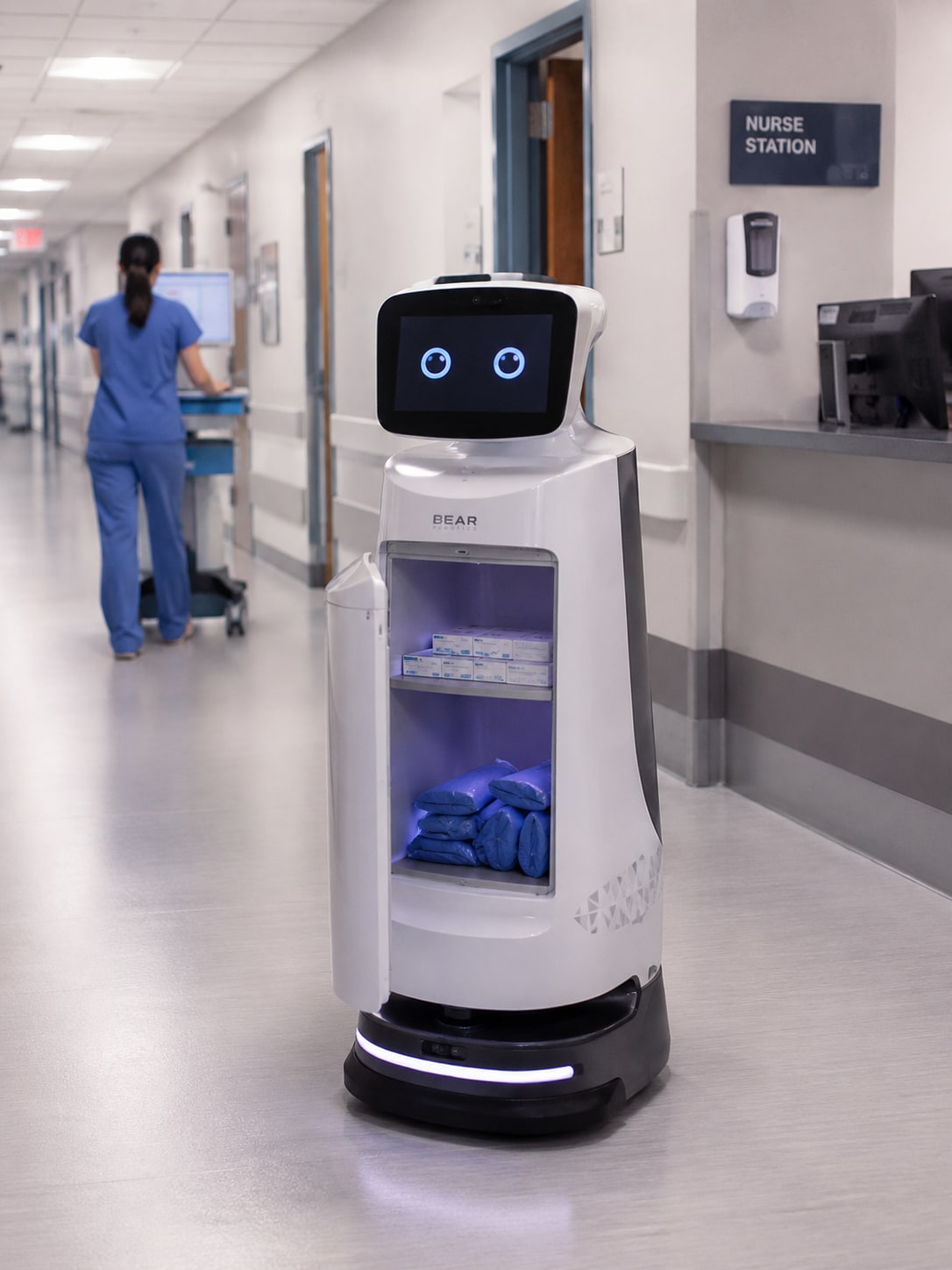
Service robots are the practical backbone of modern hospitality.
Read more
Where a humanoid is built to be watched, a service robot is built to be useful: it carries plates across a restaurant, ferries linens down a hotel corridor, buses dirty dishes back to the pass, guides a guest to their table and clears the repetitive trips so staff can spend their time on people. Almost all of them share the same practical shape, a wheeled base, a stack of trays or an enclosed cabinet, a friendly face screen, and a lidar-and-camera sensor suite that lets them weave through crowded, unpredictable rooms without clipping a single guest.
The category took off because the economics are blunt. A single serving robot can cover tens of thousands of metres a shift, run open-to-close without a break, and pay for itself against the labour cost of the runs it absorbs. That is why they now appear in casual-dining chains, hotels, hospitals, senior-living communities and corporate cafeterias alike. This guide covers the full service and hospitality segment, food-running and bussing robots, tray-delivery units, and room-service and concierge robots, with real 2026 rental and purchase pricing and the companies that build them.
What are service robots used for?
Service robots earn their place wherever staff spend the day walking instead of serving. The most common jobs are:
- Food running & bussing. Carry dishes from kitchen to table and haul dirty plates back, the single highest-volume task in restaurants, absorbing the trips that burn out waitstaff.
- Hotel room delivery. Ride the lifts and navigate corridors to bring towels, toiletries, snacks and room-service orders to guest doors, day or night, without staffing the run.
- Bulk transport in facilities. Move linens, meals, lab samples and supplies through hospitals, senior-living homes and offices on repeatable, scheduled routes.
- Guidance & greeting. Meet guests at the door, lead them to a table or room, and answer basic questions with a face screen and voice in multiple languages.
- Tray & drink service. Circulate through banquets, lounges and casino floors offering drinks and canapés hands-free during peak service.
How much do service robots cost?
Service robots are among the cheapest commercial robots to run, so they are usually leased by the month rather than rented by the day. Typical 2026 ranges:
| Engagement | Typical 2026 range | What it usually includes |
|---|---|---|
| Daily rental | See verified rates · Request a quote | Robot, delivery and setup; higher end for multi-robot or fully staffed events. |
| Monthly lease | $1,000 to $3,000 / mo | The common model for restaurants and hotels, support and software bundled. |
| Purchase: single serving unit | $15,000 to $30,000 | One tray-delivery or bussing robot with base software. |
| Purchase: premium / fleet-grade | $30,000 to $60,000 | Enclosed cabinet units, fleet management and POS/PMS integrations. |
Ranges reflect typical 2026 commercial pricing across the BuyAndRentRobots.com directory and vary by region, duration, configuration, staffing and support. Submit a free inquiry for exact quotes from matched companies. For two real, publicly verified event-robot rental starting prices rather than a typical range, see the 2026 event robot rental cost guide.
Which businesses use service robots?
Service robots sell to any operation squeezed by tight labour and endless repetitive trips:
- Restaurants & cafés, chains and independents offloading food-running and bussing to keep staff on hospitality.
- Hotels & resorts, adding contactless room delivery and a memorable concierge touch.
- Hospitals & clinics, moving meals, linens, specimens and supplies on predictable routes.
- Casinos & event venues, circulating drinks and snacks across large, busy floors.
- Corporate campuses, internal delivery, mailroom runs and cafeteria service.
- Senior-living communities, reducing staff walking so carers spend more time with residents.
Rent vs buy service robots
The rule of thumb: rent for moments and trials, buy for programs.
Rent a service robot
- No capital outlay: pay by the day, the event or the month.
- Delivery, setup, mapping and support are usually included.
- Deploy in days to cover a busy season or a launch.
- Scale the fleet up or down as covers rise and fall.
- Test the workflow before committing to a purchase.
Buy a service robot
- Lowest cost per trip once the robot runs daily shifts.
- An owned asset that works open-to-close, every day.
- Full control of routes, maps and POS or PMS integrations.
- Break-even often lands within 6 to 12 months at restaurant volumes.
- Budget for charging docks, cleaning and periodic servicing.
Featured service robot companies
Companies that rent and sell service robots, look for the blue Verified Partner badge on confirmed partners. Tap through for profiles, catalogues and quotes.
Available service robots
Specific service robot models listed for rent or purchase right now.
Service Robots: frequently asked questions
What is a service robot?
A service robot is a wheeled, autonomous robot built to carry things and assist people in hospitality and facility settings, running food, bussing tables, delivering to hotel rooms or moving supplies. It uses lidar and cameras to navigate busy spaces safely around guests and staff.
How much does it cost to rent a service robot?
Service robot rental pricing varies by model, operator and service level (see verified rental pricing on our data hub), and many operators instead lease monthly at roughly $1,000 to $3,000 per month with support and software included. Buying outright ranges from about $15,000 to $60,000 per unit.
Can service robots work in a busy restaurant?
Yes. Modern serving robots are built for crowded, unpredictable dining rooms, they map the space, detect people and obstacles, and pause or reroute to avoid collisions. Most carry several trays or an enclosed cabinet and run continuous shifts on one charge cycle.
Do service robots replace waitstaff?
No. They take over the repetitive walking, mainly food-running and bussing, so staff spend more time on guests. Operators usually redeploy people to service and upselling rather than cut headcount, and report faster table turns and less fatigue.
How long does a service robot run on a charge?
Most run a full shift, commonly 8 to 12 hours, and return to a charging dock automatically when low. Busy sites often run two robots or add a short fast-charge break so coverage never drops during peak service.
Find your service robot
Compare service robot companies, or tell us what you need and get matched with the ones that fit, free to search.