Humanoid Robots: Rent or Buy
Two-legged, upper-body or full-size, humanoid robots greet guests, host activations and headline demos. Compare 2026 pricing, see which industries deploy them, and jump to the companies that rent and sell them.
How much does it cost to rent a humanoid robot? Humanoid rental pricing varies by model, operator and service level (see verified rental pricing on our data hub), including branding, staffing and whether it is a wheeled greeter or a full-size walking platform. Multi-day event packages generally land between $3,000 and $15,000 with content, wrap and logistics included.
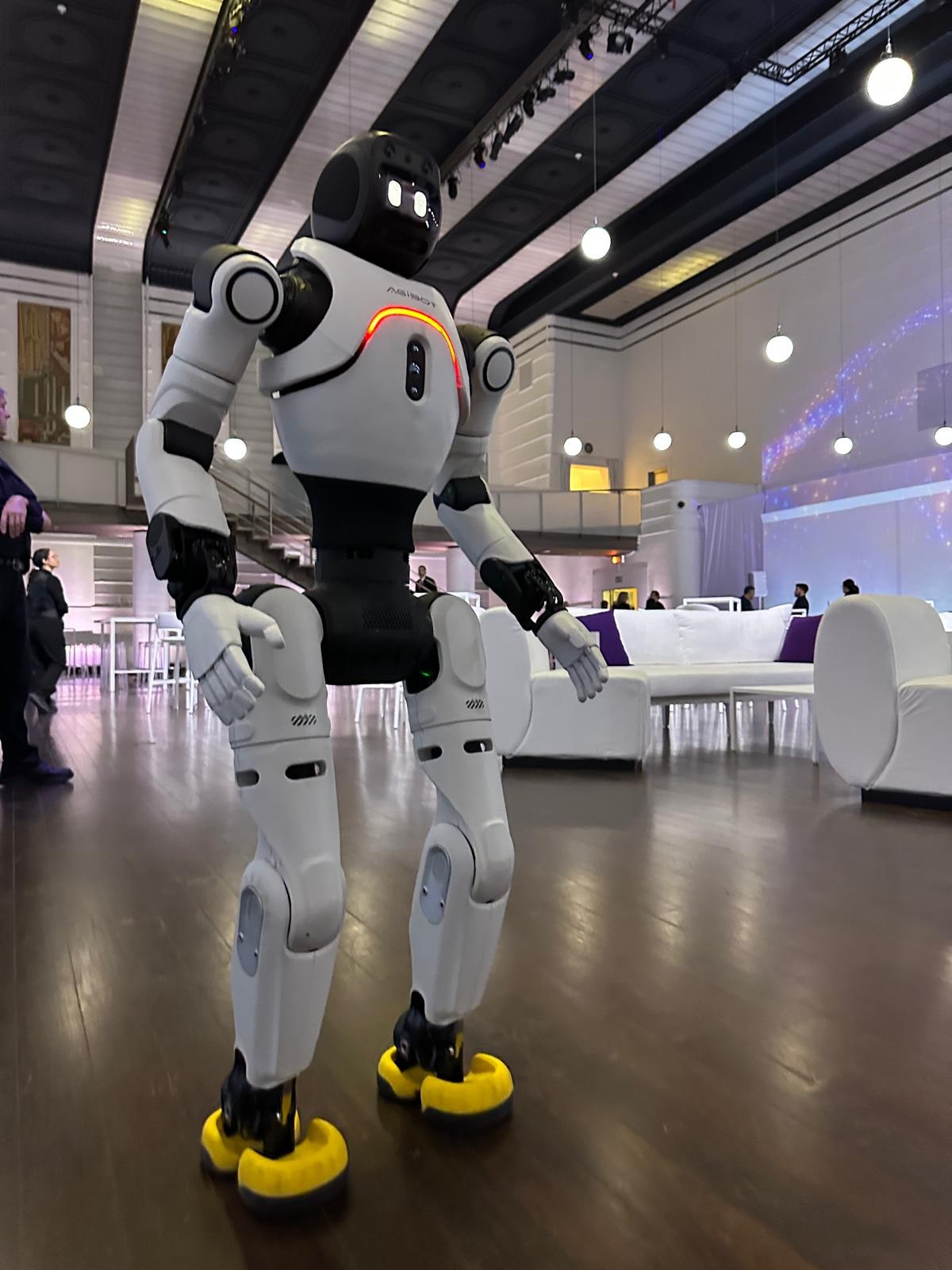
Humanoid robots are the most recognizable category in commercial robotics, and the one most shaped by the last two years of progress. A humanoid is any robot built to echo the human form: a head, a torso, articulated arms and, increasingly, legs that walk.
Read more
That human shape is the point. It lets a robot work in spaces designed for people, hold eye contact with a crowd, gesture while it speaks, and draw attention in a way no wheeled cart ever will.
In practice, “humanoid” spans a wide range. At one end sit tabletop and upper-body greeters, a head, a face screen and two expressive arms on a rolling base, used for reception, wayfinding and brand activations. At the other end are full-size bipedal robots that walk, climb steps and carry payloads, now moving from research labs into warehouses and live demonstrations. Between those poles are the crowd-pleasers most event planners actually book: chest-height, wheeled humanoids that dance, pose for photos, answer questions in multiple languages and wear your logo for a weekend. This guide covers the whole spectrum, with real 2026 rental and purchase pricing and the companies that supply each tier.
What are humanoid robots used for?
Because they hold human attention, humanoids earn their keep wherever engagement is the goal. The most common commercial jobs are:
- Events & brand activations. A humanoid on the show floor is a magnet, it stops traffic, gathers a crowd and gives people a reason to film and share. Planners rent them for product launches, trade shows, galas and store openings.
- Reception & concierge. In lobbies, showrooms and visitor centres, humanoids greet arrivals, answer FAQs, check people in and hand off to staff, a memorable first touch that also frees a front desk.
- Retail & experiential marketing. As a roving brand ambassador, a humanoid demos products, runs quizzes and captures leads while staying relentlessly on-message.
- Education & public engagement. Museums, universities and science centres use humanoids to explain exhibits and make STEM tangible for visitors.
- Demonstrations & R&D. Full-size bipedal platforms are bought by integrators, universities and manufacturers to develop and showcase locomotion, manipulation and AI.
How much do humanoid robots cost?
Humanoids are the widest-priced robot type, a photo-op greeter and a walking bipedal platform are worlds apart. Typical 2026 ranges:
| Engagement | Typical 2026 range | What it usually includes |
|---|---|---|
| Daily rental | See verified rates · Request a quote | Robot, delivery, on-site operator and basic branding; higher end for full-size or multi-robot setups. |
| Event package (2 to 3 days) | $3,000 to $15,000 | Multi-day activation, custom content and wrap, staffing and logistics bundled. |
| Purchase: greeter / upper-body | $16,000 to $50,000 | Wheeled, chest-height humanoid for reception and activations; software and support tiers vary. |
| Purchase: advanced / full-size bipedal | $50,000 to $200,000 | Walking platforms with advanced manipulation and AI, for R&D, demos and early industrial pilots. |
Ranges reflect typical 2026 commercial pricing across the BuyAndRentRobots.com directory and vary by region, duration, branding, staffing and software. Rentals frequently bundle transport and an operator; purchases are often quoted before shipping, integration and support contracts. Submit a free inquiry for exact quotes from matched companies. For two real, publicly verified event-robot rental starting prices rather than a typical range, see the 2026 event robot rental cost guide.
Which businesses use humanoid robots?
Humanoids show up wherever a brand wants to be remembered or a space wants a memorable host. The most active buyers and renters are:
- Event agencies & experiential marketers booking short, high-impact activations for clients.
- Hotels, casinos and hospitality groups adding a signature concierge or lobby attraction.
- Retailers, auto showrooms and shopping centres running in-store demos and greeters.
- Museums, universities and science centres engaging visitors and teaching STEM.
- Technology brands and integrators using humanoids in keynotes, booths and proofs-of-concept.
- Manufacturers and logistics firms piloting full-size bipedal robots for future automation.
Rent vs buy humanoid robots
The rule of thumb: rent for moments, buy for programs.
Renting a humanoid means no upfront investment and an operator usually included (see verified rental pricing on our data hub): the right call for events, launches and one-off pilots.
Read more
Buying costs $16,000 to $200,000 outright, which usually makes more sense than renting for a permanent reception, showroom or R&D deployment.
Read the full rent vs buy a humanoid robot guide for the complete comparison table, pros/cons and decision guidance, or the general rent vs buy a robot guide across every robot type.
Featured humanoid robot companies
Companies that rent and sell humanoid robots, look for the blue Verified Partner badge on confirmed partners. Tap through for profiles, catalogues and quotes.
Available humanoid robots
Specific humanoid models listed for rent or purchase right now.
Humanoid robots: frequently asked questions
What is a humanoid robot?
A humanoid robot is built to resemble the human body, typically a head, torso and articulated arms, and sometimes legs. That human form lets it work in spaces made for people and interact naturally with a crowd. Commercially, humanoids range from wheeled upper-body greeters to full-size bipedal robots that walk.
How much does it cost to rent a humanoid robot?
Humanoid rental pricing varies by model, operator and service level (see verified rental pricing on our data hub), including branding, staffing and whether it is a wheeled greeter or a full-size walking platform. Multi-day event packages generally land between $3,000 and $15,000 with content, wrap and logistics included.
Can humanoid robots walk and talk to people?
Many can. Full-size bipedal humanoids walk and balance dynamically, while the wheeled greeters common at events roll smoothly and focus on expressive arms and faces. Most support speech, multi-language conversation, gestures and a face or chest screen for interactive engagement.
Should I rent or buy a humanoid robot?
Rent for events, launches, seasonal peaks and pilots where you need impact without capital cost, rentals usually include an operator and transport. Buy when a humanoid will be used frequently, such as a permanent lobby concierge or an R&D platform.
What are humanoid robots used for at events?
At events they act as crowd-drawing attractions and brand ambassadors, greeting guests, posing for photos, answering questions, running product demos, capturing leads and headlining launches. Their novelty and human presence make them one of the most shareable activations on a show floor.
Find your humanoid robot
Compare humanoid robot companies, or tell us your event, budget and dates and get matched with the ones that fit, free to search.
Related robot types
Service Robots
Hospitality and serving robots for hotels, restaurants and venues.
Explore service robotsEntertainment Robots
Interactive robots for shows, activations and crowd engagement.
Explore entertainment robotsDelivery Robots
Autonomous robots for last-mile and in-venue delivery.
Explore delivery robots