Delivery Robots: Rent or Buy
From sidewalk last-mile to in-venue room service, autonomous delivery robots move goods without a driver. Compare 2026 pricing, use cases and the companies that rent and sell them.
How much does it cost to rent a delivery robot? Delivery robot rental pricing varies by model, operator and service level (see verified rental pricing on our data hub), with weekly pilots around $1,000 to $4,000. Buying ranges from about $15,000 for an indoor courier to $75,000 for an outdoor, fleet-grade last-mile robot.
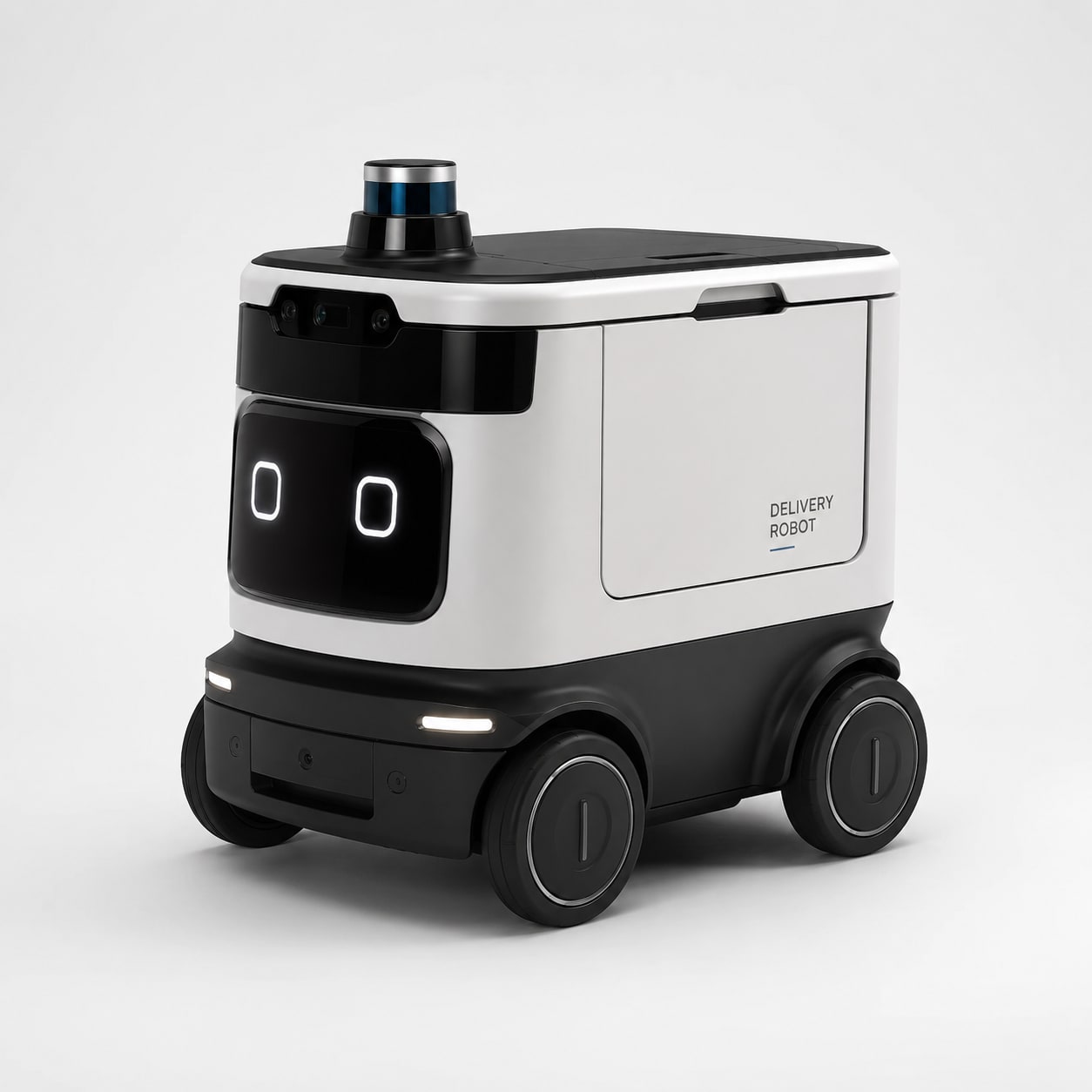
Delivery robots automate the single most repetitive task in logistics: moving one item from A to B. They split into two broad families that look very different but solve the same problem.
Read more
Indoor delivery robots, enclosed, cabinet-style units, ride lifts and roll through hotels, hospitals and offices to drop parcels, meals and supplies at a door. Outdoor last-mile robots, six-wheeled, cooler-sized machines, trundle along sidewalks and campus paths carrying groceries and takeout to a customer’s address. Both navigate autonomously with GPS, lidar and cameras, and both are designed to run a route dozens of times a day for a fraction of the cost of a human courier.
What makes the category compelling is unit economics at scale. A last-mile robot has no wage, no fuel and no idle time between orders; an indoor unit removes the porter trip entirely. Operators deploy them as fleets managed from a single dashboard, so one supervisor can oversee dozens of active deliveries. This guide covers the whole delivery segment, indoor cabinet robots, sidewalk and campus last-mile robots, and hospital and hotel couriers, with real 2026 rental and purchase pricing and the companies that supply them.
What are delivery robots used for?
Delivery robots pay off wherever short trips repeat all day. The most common jobs are:
- Last-mile & campus delivery. Carry groceries, takeout and parcels along sidewalks and campus paths to a customer’s door, cutting the cost of the final stretch.
- Hotel & hospital courier runs. Deliver room-service orders, medication, linens and lab samples between floors and departments, autonomously calling the lift.
- Office & campus mail. Move documents, packages and supplies between desks, mailrooms and buildings on scheduled loops.
- In-venue food & retail. Bring orders to seats, suites and hotel rooms at stadiums, resorts and casinos without pulling staff off the floor.
- Micro-fulfilment & dark stores. Shuttle picked orders from a back-of-house store to a handoff point or waiting robot fleet.
How much do delivery robots cost?
Delivery robots are often deployed as fleets on short rentals or robotics-as-a-service. Typical 2026 ranges:
| Engagement | Typical 2026 range | What it usually includes |
|---|---|---|
| Daily rental | See verified rates · Request a quote | Per robot, with delivery and setup; volume rates for fleets. |
| Weekly rental | $1,000 to $4,000 / week | Common for pilots, events and seasonal peaks. |
| Purchase: indoor cabinet unit | $15,000 to $40,000 | Enclosed hotel/hospital courier with lift integration. |
| Purchase: sidewalk / fleet-grade | $40,000 to $75,000 | Outdoor last-mile robot with weather sealing and fleet software. |
Ranges reflect typical 2026 commercial pricing across the BuyAndRentRobots.com directory and vary by region, duration, configuration, staffing and support. Submit a free inquiry for exact quotes from matched companies.
Which businesses use delivery robots?
Delivery robots sell to operators who move many small things over short distances:
- Hotels & resorts, contactless room delivery and amenity runs at any hour.
- Hospitals & labs, moving medication, samples and supplies between departments.
- Grocery, food & retail, last-mile delivery across neighbourhoods and campuses.
- Universities & corporate campuses, student and staff delivery plus internal mail.
- Stadiums, casinos & resorts, in-venue food and retail delivery to seats and suites.
- Logistics & micro-fulfilment, shuttling picked orders inside dark stores and depots.
Rent vs buy delivery robots
The rule of thumb: rent for moments and trials, buy for programs.
Rent a delivery robot
- No capital outlay: pay per robot, per week or per season.
- Fleet software, mapping and support usually included.
- Prove the route economics before scaling a fleet.
- Add or remove robots as order volume changes.
- Vendor handles maintenance, charging and updates.
Buy a delivery robot
- Lowest cost per delivery at high daily order counts.
- Own the fleet and the delivery experience end to end.
- Integrate directly with your ordering and dispatch systems.
- Break-even often lands within 12 to 18 months on dense routes.
- Plan for charging infrastructure, spares and fleet management.
Featured delivery robot companies
Companies that rent and sell delivery robots, look for the blue Verified Partner badge on confirmed partners. Tap through for profiles, catalogues and quotes.
Available delivery robots
Specific delivery robot models listed for rent or purchase right now.
Delivery Robots: frequently asked questions
What is a delivery robot?
A delivery robot is an autonomous, wheeled robot that transports goods without a driver, either an enclosed indoor unit that runs hotels, hospitals and offices, or a sidewalk last-mile robot that carries food and parcels to a customer. Both navigate with GPS, lidar and cameras.
How much does it cost to rent a delivery robot?
Delivery robot rental pricing varies by model, operator and service level (see verified rental pricing on our data hub), with weekly pilots around $1,000 to $4,000. Buying ranges from about $15,000 for an indoor courier to $75,000 for an outdoor, fleet-grade last-mile robot.
Are delivery robots allowed on public sidewalks?
In many cities, yes, a growing number of jurisdictions permit low-speed sidewalk delivery robots, sometimes with weight, speed or permit rules. Regulations vary by location, so most operators start on private campuses or in cities with established rules before expanding.
How much can a delivery robot carry?
It depends on the model. Indoor couriers typically carry a few parcels or meals in an enclosed cabinet, while outdoor last-mile robots usually hold around 10 to 20 kilograms, roughly a couple of grocery bags or several takeout orders per trip.
Can one person manage several delivery robots?
Yes. Delivery robots are run as fleets from a single dashboard, so one supervisor can monitor dozens of active deliveries at once, stepping in only for exceptions such as a blocked path or a failed handoff.
Find your delivery robot
Compare delivery robot companies, or tell us what you need and get matched with the ones that fit, free to search.