Robots for Healthcare
A nurse should be at the bedside, not walking a specimen to the lab or hunting for a clean supply cart. Hospital robots move the meds, samples and linens and disinfect the rooms, giving clinical time back to clinical staff.
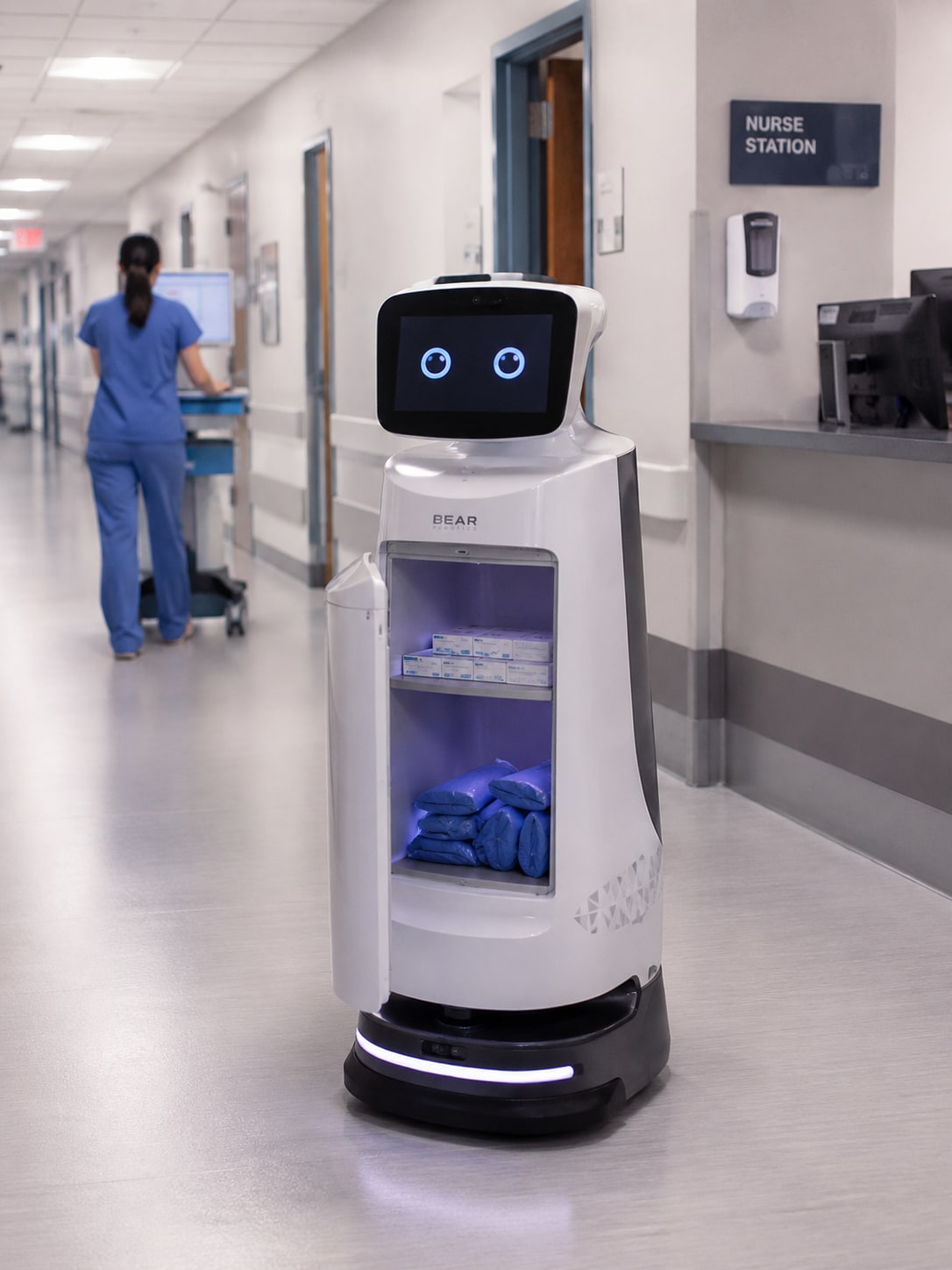
Walk any hospital corridor at shift change and you will see highly trained, expensive clinical staff doing logistics: pushing a cart of linens, carrying a blood sample to the lab, fetching a missing supply from three floors down.
Read more
Every one of those trips is time taken from patients. Healthcare robots are built to give that time back. Autonomous couriers move medications, specimens, meals and supplies on scheduled routes; disinfection robots sanitise a discharged room with UV-C in minutes; assistive and clinical robots support procedures and rehabilitation. The common thread is not replacing clinicians but removing the non-clinical load that fills their day.
Healthcare is also where the stakes make robots especially valuable. Consistent UV-C disinfection measurably supports infection control; reliable, tracked delivery reduces medication and specimen errors; and 24/7 logistics keep a hospital moving through the night when staffing is thinnest. The trade-off is that healthcare is regulated and integration-heavy, so deployments are more considered than in hospitality, most are bought and integrated with hospital systems, though disinfection and delivery units are increasingly leased. This guide covers why robots work in healthcare, which robot types fit which jobs, what they cost in 2026, real scenarios across a hospital, and the companies that supply them.
Why use robots for healthcare?
- Give clinical time back. Autonomous couriers move meds, specimens, meals and supplies so nurses and porters stop walking the building and stay with patients.
- Infection control. UV-C and spray disinfection robots sanitise discharged rooms, ORs and public areas to a consistent, logged standard between uses.
- Round-the-clock logistics. Robots run supply and delivery routes through the night, when human staffing is thinnest, without overtime or gaps.
- Fewer errors on critical runs. Tracked, scheduled delivery of medication and lab samples reduces the handoffs where mistakes and delays creep in.
- Support, not replacement. Assistive and clinical robots extend what a team can do, from precise procedure support to rehabilitation, with staff always in control.
Best robot types for healthcare
These are the robot categories that fit healthcare best. Open any guide for pricing, rent-vs-buy and the companies that supply it.
Medical Robots
Clinical, surgical and assistive robots support procedures, rehabilitation and diagnostics, the regulated, high-value core of hospital robotics.
Explore medical robotsCleaning Robots
UV-C and spray disinfection robots sanitise patient rooms, operating theatres and public areas for infection control, alongside autonomous floor care.
Explore cleaning robotsService Robots
Delivery and courier robots move medications, specimens, meals and linens between departments on scheduled, tracked routes, freeing clinical staff.
Explore service robotsWhat it costs
Healthcare robots span low-cost delivery units to major clinical systems, so pricing is wide. The ranges below come from the robot types that fit healthcare best:
| Engagement | Typical 2026 range | What it usually includes |
|---|---|---|
| Delivery / service robot: daily | See verified rates · Request a quote | Courier robot moving meds, samples, meals and supplies between departments. |
| Disinfection robot: monthly lease | $1,500 to $4,000 / mo | UV-C or spray disinfection unit with service and support for infection control. |
| Clinical robot: daily rental | See verified rates · Request a quote | Assistive or specialised clinical robot for procedures or rehabilitation. |
| Purchase: clinical / surgical system | $50,000 to $500,000 | An owned, integrated clinical or surgical robot for permanent hospital use. |
Ranges reflect typical 2026 commercial pricing across the BuyAndRentRobots.com directory and vary by region, duration, configuration, staffing and support. Submit a free inquiry for exact quotes from matched companies.
Real scenarios
- Overnight pharmacy delivery. A courier robot runs medications from pharmacy to wards through the night on a tracked schedule, so night staff stay on the floor.
- Lab specimen transport. Blood and tissue samples move from collection to lab automatically, cutting the porter trips and the delays that spoil time-sensitive tests.
- Terminal room disinfection. After a discharge, a UV-C robot sanitises the room in minutes to a logged standard before the next admission.
- Meal & linen distribution. Service robots distribute meals and fresh linens across wards on a set round, freeing nursing and portering staff for patient care.
Featured companies for healthcare
Companies that supply clinical, disinfection and delivery robots for healthcare worldwide, look for the blue Verified Partner badge on confirmed partners. Tap through for profiles and quotes, tell them your facility and systems, and they’ll scope the deployment.
Robots for healthcare: frequently asked questions
How much do healthcare robots cost?
It spans a wide range in 2026. Delivery and service robot rental pricing varies by model and service level (see verified rental pricing on our data hub), a disinfection robot leases at roughly $1,500 to $4,000 a month, and clinical rentals are quoted per engagement. Buying an integrated clinical or surgical system ranges from about $50,000 to $500,000.
Do disinfection robots really reduce infection risk?
Used correctly, UV-C and spray disinfection robots deliver a consistent, measured dose to every surface in a room, more repeatable than manual cleaning alone. They supplement, not replace, standard cleaning protocols and are typically deployed for terminal cleans and high-risk areas.
Can delivery robots use hospital lifts and secure areas?
Yes. Hospital courier robots integrate with lift systems and access control to move between floors and into secure or clinical zones, and reputable suppliers handle that integration and the security requirements as part of the rollout.
Do healthcare robots replace nurses or porters?
No. They take over non-clinical transport and disinfection so clinical staff spend more time with patients. The goal is to remove the logistics load that pulls nurses and porters away from care, not to cut those roles.
How are safety and regulation handled?
Clinical and surgical robots are regulated medical devices and are procured and integrated accordingly, with staff training and clinical governance. Delivery and disinfection robots follow the hospital’s safety, hygiene and access protocols; suppliers should evidence compliance before deployment.
Find robots for healthcare
Compare companies that supply robots for healthcare, or tell us what you need and get matched with the ones that fit, free to search.