Robots for Restaurants
The runner’s job is the one that burns people out: ten thousand steps a shift carrying plates and bussing dishes. Hand it to a robot and your servers stay on the floor with guests. Compare 2026 pricing and the companies that supply restaurant robots.
Anyone who has worked a dinner rush knows the bottleneck isn’t the kitchen or the till, it’s the legs.
Read more
Food sits under the heat lamp because the runner is at table nine; tables don’t turn because nobody has cleared table four; and by hour six the staff who should be upselling dessert are just trying to stay upright. A serving robot attacks that bottleneck directly. It carries three or four covers at once from the pass to the table, hauls the dirty stack back to the dish pit, and does the walking that quietly exhausts a floor team, over and over, without a break or a bad night.
The reason robots took hold in restaurants before almost anywhere else is that the maths is blunt and the payback is fast. A single serving robot covers tens of thousands of metres a shift and, at restaurant volumes, pays for itself against the runs it absorbs in a matter of months. Crucially it doesn’t replace the server, it removes the trips so the server can do the part that earns tips and repeat visits. Most operators lease monthly to keep it simple, though high-volume owner-operators buy. This guide covers why robots work in restaurants, which robot types fit which jobs, what they cost in 2026, real scenarios from casual dining to ghost kitchens, and the companies that supply them.
Why use robots for restaurants?
- Absorb the food-running. The robot carries plates from pass to table and dirty dishes back, the single highest-volume, most tiring task on the floor, so servers stop clocking miles.
- Faster table turns. Quicker running and bussing means tables clear and reset sooner, lifting covers per shift without adding floor staff.
- Less burnout, better retention. Taking the repetitive walking off your team reduces fatigue and the churn that comes with it, a real cost saving in a hard-to-staff industry.
- Consistency at peak. Hour six of a Saturday is when service slips; a robot runs the same steady loop from first cover to last, holding service standards through the rush.
- A cover for staffing gaps. When you’re a server down, the robot keeps the running and bussing covered rather than leaving food under the lamp and tables uncleared.
Best robot types for restaurants
These are the robot categories that fit restaurants best. Open any guide for pricing, rent-vs-buy and the companies that supply it.
Service Robots
Food-running and bussing robots carry multiple trays from kitchen to table and clear dishes back to the pass, the core restaurant robot, built for crowded dining rooms.
Explore service robotsDelivery Robots
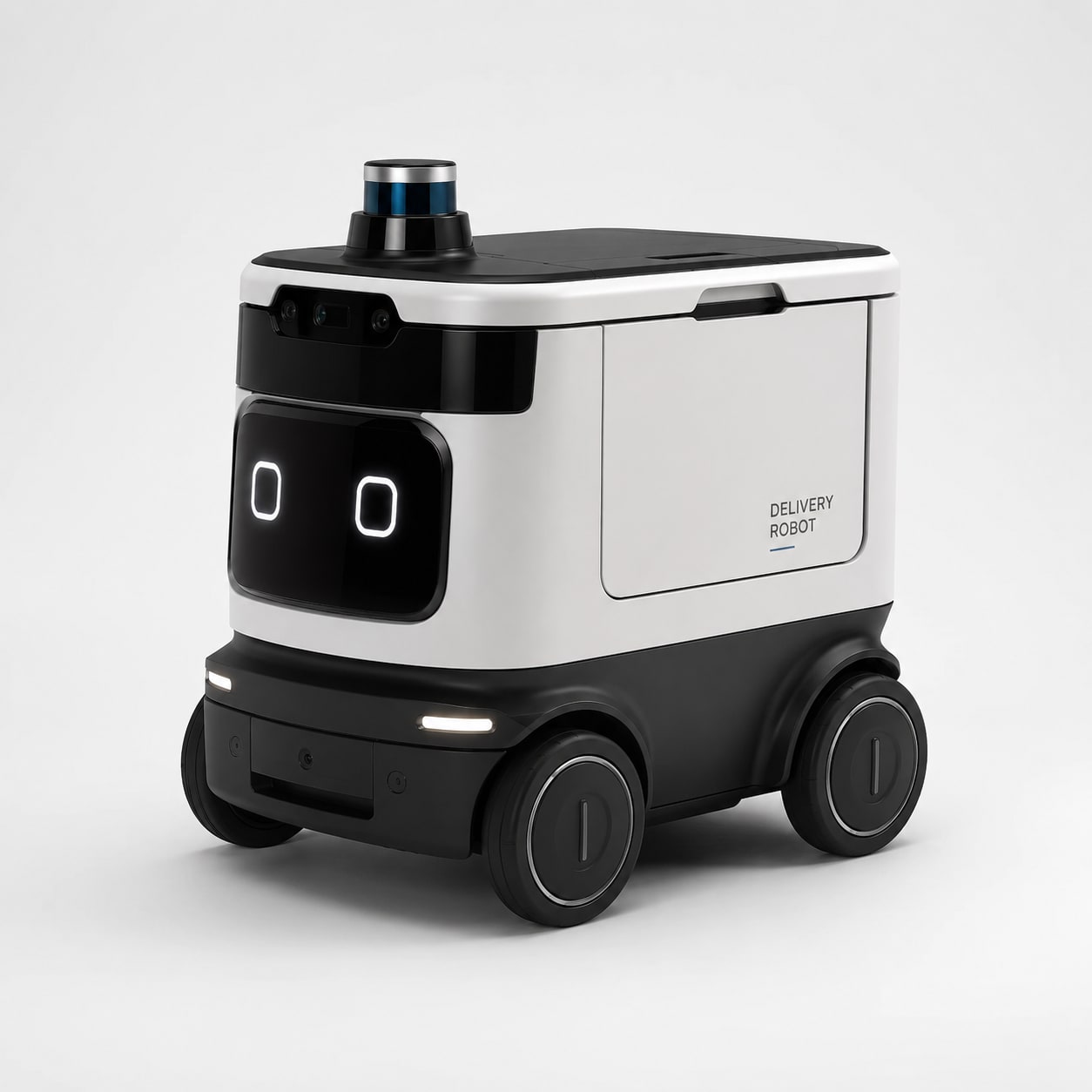
In-venue and last-mile delivery robots extend the floor to the kerb and beyond, handling ghost-kitchen and takeout runs without a driver.
Explore delivery robotsWhat it costs
Restaurant robots are among the cheapest commercial robots to run and are usually leased monthly. The ranges below come from the robot types that fit restaurants best:
| Engagement | Typical 2026 range | What it usually includes |
|---|---|---|
| Serving robot: monthly lease | $1,000 to $3,000 / mo | Food-running or bussing robot with support and software, the common restaurant model. |
| Serving robot: daily rental | See verified rates · Request a quote | Short-term rental for events, pop-ups or a trial before committing. |
| Delivery robot: daily | See verified rates · Request a quote | In-venue or last-mile delivery unit for takeout and ghost-kitchen runs. |
| Purchase: serving unit | $15,000 to $40,000 | An owned tray-delivery or bussing robot for a permanent, high-volume floor. |
Ranges reflect typical 2026 commercial pricing across the BuyAndRentRobots.com directory and vary by region, duration, configuration, staffing and support. Submit a free inquiry for exact quotes from matched companies.
Real scenarios
- Busy casual-dining floor. A serving robot runs mains from the pass while servers greet, describe specials and upsell, covers per shift rise without a bigger team.
- Hot-pot & BBQ service. The robot handles the constant refill and plate runs these formats demand, keeping the meal flowing while staff manage the table.
- Ghost kitchen & takeout. A delivery robot shuttles finished orders from the kitchen to a handoff point or the kerb, cutting the cost of the final stretch.
- Banquets & buffets. Tray-service robots circulate dishes and clear plates across a large function room so staff focus on guests, not laps.
Featured companies for restaurants
Companies that supply food-running, bussing and delivery robots for restaurants worldwide, look for the blue Verified Partner badge on confirmed partners. Tap through for profiles and quotes, tell them your covers and floor plan, and they’ll size the fleet.
Robots for restaurants: frequently asked questions
How much does it cost to rent a restaurant robot?
Most restaurants lease a serving robot monthly at roughly $1,000 to $3,000 with support and software included; short daily rentals are quoted per booking (see verified rental pricing on our data hub). A delivery robot rents by the day, and buying a serving unit outright is roughly $15,000 to $40,000.
Do restaurant robots replace waiters?
No. They take over the food-running and bussing so servers spend more time greeting, describing specials and upselling. Operators typically redeploy staff to hospitality and report faster table turns, not smaller teams.
Can a serving robot handle a packed dining room?
Yes. Modern serving robots map the room and use lidar and cameras to detect people and obstacles, pausing or rerouting to avoid collisions. They’re specifically built for crowded, unpredictable floors and carry several covers per trip.
What’s the payback on a restaurant robot?
At typical restaurant volumes the labour a serving robot absorbs usually covers its monthly lease many times over, and purchased units often break even within roughly six to twelve months of daily service.
How long does a serving robot run between charges?
Most run a full shift, commonly eight to twelve hours, and return to a charging dock automatically when low. Busy venues add a short top-up or a second robot so coverage never drops during service.
Find robots for restaurants
Compare companies that supply robots for restaurants, or tell us what you need and get matched with the ones that fit, free to search.